Our Minister's Reflections
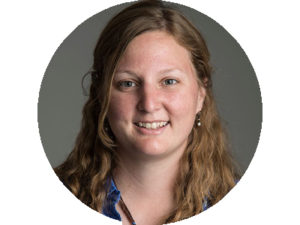
Reflections From Rev. Stacy Craig’s Desk
The Reverse Bucket List
Sometimes life takes an unexpected turn, leaving us on a path where our old goals, dreams, and bucket list no longer show up on the map. This past year, my ongoing symptoms received a name: fibromyalgia. The exercises that ease my neck’s nerve compression often trigger flare-ups instead. My neck and upper back feel like they are hardening into a coat of armor, bringing migraines and making long travel unbearable. My vision board shifted from canoeing, backpacking, and fostering to simply surviving the day without a headache.
Years ago in a Soul Matters group, we were invited to write our life story using a reverse bucket list. We set out buckets with labels like relationships I’m grateful for, moments of wonder, places I’ve traveled, and things I’m proud of. Filling them shifted our focus to gratitude for the life we’re living. I’m not trying to reframe or only focus on positives, I am just stating a fact as I review my buckets: I am living an amazing life.
Illness, betrayal, and grief can alter our lives instantly. Autumn in the Northwoods reminds us that change, though beyond our control, can include beauty. A reverse bucket list pairs naturally with this season, inviting reflection as we move into the thin time of year.
“And when it happens that you are broken, or betrayed, or left, or hurt, or death brushes near, let yourself sit by an apple tree and listen to the apples falling all around you in heaps, wasting their sweetness. Tell yourself you tasted as many as you could.”
Louise Erdrich, The Painted Drum
Sending abundant blessings to you in this season of change, in whatever season of life you are journeying through,
Rev. Stacy
Welcome to 2026-2027 Service Year!
Welcome to the 2026-2027 service year at Chequamegon Unitarian Universalist Fellowship! CUUF currently gathers differently in the summer, and I wanted to dedicate this column to sharing reflections from the impactful summer services.
June 7: Our Congregational Life Consultant from the Unitarian Universalist Association, QuianaDenae Perkins, shared two days with the fellowship helping to facilitate activities and discussions about where CUUF came from and where we are going. Given feedback that only meeting twice per month made building community difficult, QuianaDenae asked if we thought we could add one more service or program each month which didn’t add staff time to help build community. This has turned into the new pilot of adding a lay-led contemplative service on the 3rd Sunday of each month. QuianaDenae also shared her message, “Running on Faith.” The children’s book she shared has become one of my favorites: Her Fearless Run:Kathrine Switzer’s Historic Boston Marathon by Kim Chaffee (Author), Ellen Rooney (Illustrator).
July 19: Together with the UU Fellowships in Houghton, MI, Marquette, MI, and Thunder Bay, Ontario, Chequamegon UU Fellowship had a Lake Superior Day service. Each fellowship shared a part of the service. It was so well received there’s interest in making this an annual event. One unexpected outcome was hearing from our UU kin in Thunder Bay, Ontario about how healing the service was for them after all of the harmful policies and rhetoric against Canada which has come from the U.S. As we explored and celebrated the water that connects us and the shared values which sustain us, Lake Superior Day was truly a blessing for us all.
August 9: In partnership with the League of Women Voters of Ashland and Bayfield Counties, the We the People All Poetry Service was well attended and powerful. A celebration of life was held for the Voting Rights Act, complete with an obituary, eulogy, and cremation. We envisioned a new Voting Rights Act in Wisconsin with transparency, fairness, and common sense to decrease barriers to voting. Below is one of the readings shared at the service:
My Symphony by William Henry Channing (1780–1842), Unitarian Minister
To live content with small means.
To seek elegance rather than luxury,
and refinement rather than fashion.
To be worthy not respectable,
and wealthy not rich.
To study hard, think quietly, talk gently,
act frankly, to listen to stars, birds, babes,
and sages with open heart, to bear all cheerfully,
do all bravely, await occasions, hurry never.
In a word, to let the spiritual,
unbidden and unconscious,
grow up through the common.
This is to be my symphony.
I’m looking forward to gathering together again in September to continue to ground ourselves in the common good in this unique and beautiful place we call home.
In fellowship,
Rev. Stacy Craig
What do we do?
What do we do? There is a shared sense of helplessness in those I talk with. I find myself leaning on Sharon Welch’s feminist ethic of risk: we can’t know the future, but we can do the next faithful thing, in community, with accountability to one another.
That ‘next faithful thing’ is best done in context with our stories—interpreting histories, in dialogue, with community. For those using end time prophesies to justify bombing in the Middle East, knowing that communities in the past have believed they were witnessing end times is helpful in determining the next faithful thing. Some of these became self-fulfilling prophesies, while the world lived on, and end times were only for those who spiraled into self-destruction.
Knowing that, over centuries, different methods of interpretation have been used for religious texts and literal interpretations of the apocalyptic genre, such as the Book of Revelations, is an exegetical outlier, is helpful. But these helpful perspectives don’t change what has been irresponsibly taught for the past several decades in America; we are living with the consequences. It brings a quote I read recently to mind:
“History is not the past. It is the stories we tell about the past. How we tell these stories – triumphantly or self-critically, metaphysically or dialectally – has a lot to do with whether we cut short or advance our evolution as human beings.” Grace Lee Boggs, The Next American Revolution: Sustainable Activism for the Twenty-First Century
So, I will keep leaning into the next faithful thing, in community, with accountability to one another.
In fellowship,
Rev. Stacy Craig
Home
Earlier this year, I witnessed the prayers of gratitude that alumni wrote for Northland College as it was closing. Overwhelmingly, the word ‘home’ was used.
I felt at home here…
It was the first time I found home…
This was my home for many years…
I reflected on this. What makes something home and why does it matter? How did a campus, where people are coming and going all the time, create this experience? What started as a passing thought grew as curiosity led to deeper investigations and insights. For the 2025-2026 worship services, we will explore different aspects and discoveries on the overall theme of ‘home’, inviting you all to be part of the conversation as we work to build a spiritual home for one another. This theme will not limit explorations, and other services and messages will also be shared. Yet this exploration of home will run throughout the year, sometimes implied, sometimes more directly. After all, home is where the heart is.
Our Search for A New Venue
I want to express gratitude to all who helped to brainstorm and vision ideas for where this fellowship will meet in the future. I am so hopeful seeing all the care and engagement!! Based on feedback from surveys and the state of the fellowship meeting, there are several locations being toured. Here is summary of what was shared:
• Space must support our dedication to RE and families: large enough so RE and adults can gather all together, space for nursery and 5 RE groups to meet during services, possibly need a special arrangement for Holiday Service if new space does not have a stage.
• Continuing to meet in the Alvord Theater would be first choice, if possible
• Sharing space with another religious congregation has support
• Space conducive to hospitality and fellowship as well as music
• Locations in Ashland or Washburn that meet this criterion are being explored
• Accessibility, including mobility and hearing, are top priorities
• WIFI for continuing to stream services is a top priority
• Office space would be ideal if located in the same area but could be rented separately
• Some storage space is necessary for song books, RE, and worship supplies
• Purchasing a building or land to build is not on the table at this time
Other areas discussed included the aesthetics of the space as well as identity. Will people be able to find us? Will we have a clear identity if we are in a shared space? What is our story—what is most important in who we are that should be reflected in a location? If you have ideas, connections, or dissent to the directions being explored, please share with myself or your board president, Beth Lowthian. We want to move together, centering the vulnerable and marginalized.
We don’t know where we are going, but we know when we get there, we want to be together.
In community,
Rev. Stacy
Storytelling
Despair, I want to tell you a story, is that ok? Many years ago, there were loving, caring people who were really struggling with the world around them. There was dehumanizing injustice and corruption, and these people felt helpless to change it. Do you know what they did? They sang. They sang stories of love and justice. They sang of faith—which is hope without certainty. These were our UU ancestors who kept telling stories of a different future through the songs they sang. Like the tide, civil rights and rights of nature rolled over this county and they were ready to live the story they had been singing. But the tide is going out now.
Despair, I remember a time in my life defined by fear. I lost my voice. I could not speak about what was happening. It was when I stopped asking my ancestors for guidance and support and when I stopped living the story that I wanted future generations to tell their children.
This was when I stopped singing. There are many ways I can tell this story that can all be true. But here is how I tell it: when I quit singing was when I stopped believing there was hope.
Despair, whatever happens, I want to live as I know to be good and true: staying open hearted and not frozen in fear. I want to know the stories that say civilization begins by helping one another. So despair, will you sing with me?
With Love,
Rev. Stacy Craig
Stop measuring days by degree of productivity and start experiencing them by degree of presence.
–Alan Watts
Recently, a friend mailed me a hygge care package. The note inside had inspiration for embracing the season by intentionally creating special moments of connection within the home. The contents of the package delight all the senses, especially soft feels, warm fragrance, and sweet treats. I love this gift because it just keeps giving. As the shorter days call us to the contemplative practice of slowing down and going inward, receive these hygge blessings.
No matter what storms rage around us, may you find a deep breath of peace in the present moment. May there be an extra plate at the table, inviting an elder, widow, student, or anyone missing loved ones to a meal together.
May your feet be warm and dry, and if not, may you find fresh socks to put on J
May you know what makes you happy and satisfied, and know you are worth making time and resources for these things.
May you have the presence of mind to notice the delights around you.
And how could I not mention the CUUF Holiday Service on December 15 at 4 PM, which is a service that has delighted and warmed this region for decades. You could say it is an evening of hygge. Bring a friend! You never know if they are the one who will need it the most.
Holding all of you in thought and prayer this season,
Stacy Craig
Dear CUUF Fellowship,
I hope this email finds you in good physical and spiritual wellbeing, and if not, that you know you can always reach out to myself or your CUUF Caring Committee for support. I wanted to share a couple of key updates with you form this past summer and a few things regarding this coming service year.
As we look towards the fall, know that Northland College affirmed the Memorandum of Understanding to partner with CUUF for this service year. This partnership means that CUUF services and programs are available to Northland students, staff, and faculty in exchange use of campus spaces for Sunday services. Please continue to keep all those who have been impacted by Northland’s financial crises in your thoughts.
On a personal note, I concluded my quarter-time ministry position with Keweenaw UU Fellowship in Houghton, MI in August after two years with this fellowship. My goal was to move to fulltime work and I was selected for a half-time ministry with Unitarian Universalist Fellowship in Chico, CA. This position is virtual with 5-6 in person visits over the year. While my halftime ministry position with CUUF has not changed, I will have a lot less flexibility as I move to fulltime work, requiring calendar and programming adjustments. Tuesdays and Saturdays will be my days off, and I’ll have CUUF office hours and meeting times every Wednesday. I’m going to try out Google Scheduling Calendar where you can book time with me to work on projects, do a phone call, or when I’m in Ashland, meet in person. We’ll see how it works.
Looking forward to this coming service year and being in fellowship with U, U, and you,
Rev. Stacy
Seasons and Cycles
UU Fellowships cycle with the seasons, meeting for an ingathering service in the fall called the Water Service and concluding with a Flower Service in the spring. What a tremendous year it has been!! So many have shared gratitude for the speakers and musicians who shared their carefully tended stories and truths, talents and inspiration. I’ve heard people share that they’ve seen my growth in ministry (thank you!! I feel it too). Thank you to all of the volunteers who make this fellowship run vibrantly!
During this summer, we meet for services only once a month and they are less formal outdoor services at public parks. This year, they will take place on the 2nd Sunday of each month. These are great places to introduce someone to CUUF. Much of the behind-the-scenes work is also done at this time, such as preparing programs and themes for the coming year and your Board works on aligning resources to the needs of the fellowship. We’ll be sending monthly emails instead of weekly emails (plus service reminders on Sunday mornings), and your next newsletter will arrive in September.
But remember, we’re still here, working to provide the experience of sanctuary for one another, so we can provide it for the world.
—In community, Rev. Stacy Craig
Where We’ve Been – Where We Are Going
Where We’ve Been—-Where we are Going
This year, in small groups, publications, and Sunday services, we’ve engaged with the language that the larger Unitarian Universalist Association is proposing as we reassess beliefs and how they are communicated in our living tradition. As a replacement to the language of the “Six Sources” and the “Seven Principles” a multi-year process has resulted in seven values with covenantal statements for each one. The values are captured in the image to the right. Below is a list of where we’ve been as a fellowship on this exploration, where we are going, and the UUA proposed statement (if/then) related to each value:
In November, we explored “Generosity”
We cultivate a spirit of gratitude and hope.
We covenant to freely and compassionately share our faith, presence, and resources.
Our generosity connects us to one another in relationships of interdependence and mutuality.
In January, we explored “Liberating Love”
We draw from our heritages of freedom, reason, hope, and courage, building on the foundation of love.
Love is the power that holds us together and is at the center of our shared values. We are accountable to one another for doing the work of living our shared values through the spiritual discipline of Love.
In February, we explored “Justice and Equity”
We work to be diverse multicultural Beloved Communities where all thrive.
We covenant to dismantle racism and all forms of systemic oppression. We support the use of inclusive democratic processes to make decisions within our congregations, our Association, and society at large.
We declare that every person has the right to flourish with inherent dignity and worthiness.
We covenant to use our time, wisdom, attention, and money to build and sustain fully accessible and
inclusive communities.
In March, we will explore “Transformation”
We adapt to the changing world.
We covenant to collectively transform and grow spiritually and ethically. Openness to change is fundamental to our Unitarian and Universalist heritages, never complete and never perfect.
In April, we will explore “Interdependence”
We honor the interdependent web of all existence. With reverence for the great web of life and with humility,
we acknowledge our place in it.
We covenant to protect Earth and all beings from exploitation. We will create and nurture sustainable relationships of care and respect, mutuality and justice. We will work to repair harm and damaged relationships.
Finally, in May, we’ll explore “Pluralism”
We celebrate that we are all sacred beings, diverse in culture, experience, and theology.
We covenant to learn from one another in our free and responsible search for truth and meaning. We embrace our differences and commonalities with Love, curiosity, and respect.
In June, at the UUA General Assembly, delegates from congregations and fellowships will vote on whether or not this language is adopted as the collective expression of Unitarian Universalism. If you are interested in being a delegate from CUUF, please contact your Board President, Beth Lowthian or Fellowship Assistant Adam Haecker for more information. For a full history of the process and the proposed changes (called the Article II Commission),
please visit: https://www.uua.org/uuagovernance/committees/article-ii-study-commission/final-proposed-revision-article-ii? mc_cid=818141a563&mc_eid=86f894c4e6
One of the reasons for these revisions is because lists are always incomplete. Multiple amendments over the years have proposed additional sources and principles. The current language also didn’t lead individuals or fellowships into action, which is what the covenantal statements are intended to do. One way I think of the proposed language is that it provides an answer to my least favorite question: what is Unitarian Universalism? With the new language, I may say, “we are a diverse religious tradition with shared values, who work collectively to live out those values, changing systems and consciousness, and making change that would be impossible by working individually. This is what we believe in.”
In community,
The Reverse Bucket List
Sometimes life takes an unexpected turn, leaving us on a path where our old goals, dreams, and bucket list no longer show up on the map. This past year, my ongoing symptoms received a name: fibromyalgia. The exercises that ease my neck’s nerve compression often trigger flare-ups instead. My neck and upper back feel like they are hardening into a coat of armor, bringing migraines and making long travel unbearable. My vision board shifted from canoeing, backpacking, and fostering to simply surviving the day without a headache.
Years ago in a Soul Matters group, we were invited to write our life story using a reverse bucket list. We set out buckets with labels like relationships I’m grateful for, moments of wonder, places I’ve traveled, and things I’m proud of. Filling them shifted our focus to gratitude for the life we’re living. I’m not trying to reframe or only focus on positives, I am just stating a fact as I review my buckets: I am living an amazing life.
Illness, betrayal, and grief can alter our lives instantly. Autumn in the Northwoods reminds us that change, though beyond our control, can include beauty. A reverse bucket list pairs naturally with this season, inviting reflection as we move into the thin time of year.
“And when it happens that you are broken, or betrayed, or left, or hurt, or death brushes near, let yourself sit by an apple tree and listen to the apples falling all around you in heaps, wasting their sweetness. Tell yourself you tasted as many as you could.”
Louise Erdrich, The Painted Drum
Sending abundant blessings to you in this season of change, in whatever season of life you are journeying through,
Rev. Stacy
Welcome to 2026-2027 Service Year!
Welcome to the 2026-2027 service year at Chequamegon Unitarian Universalist Fellowship! CUUF currently gathers differently in the summer, and I wanted to dedicate this column to sharing reflections from the impactful summer services.
June 7: Our Congregational Life Consultant from the Unitarian Universalist Association, QuianaDenae Perkins, shared two days with the fellowship helping to facilitate activities and discussions about where CUUF came from and where we are going. Given feedback that only meeting twice per month made building community difficult, QuianaDenae asked if we thought we could add one more service or program each month which didn’t add staff time to help build community. This has turned into the new pilot of adding a lay-led contemplative service on the 3rd Sunday of each month. QuianaDenae also shared her message, “Running on Faith.” The children’s book she shared has become one of my favorites: Her Fearless Run:Kathrine Switzer’s Historic Boston Marathon by Kim Chaffee (Author), Ellen Rooney (Illustrator).
July 19: Together with the UU Fellowships in Houghton, MI, Marquette, MI, and Thunder Bay, Ontario, Chequamegon UU Fellowship had a Lake Superior Day service. Each fellowship shared a part of the service. It was so well received there’s interest in making this an annual event. One unexpected outcome was hearing from our UU kin in Thunder Bay, Ontario about how healing the service was for them after all of the harmful policies and rhetoric against Canada which has come from the U.S. As we explored and celebrated the water that connects us and the shared values which sustain us, Lake Superior Day was truly a blessing for us all.
August 9: In partnership with the League of Women Voters of Ashland and Bayfield Counties, the We the People All Poetry Service was well attended and powerful. A celebration of life was held for the Voting Rights Act, complete with an obituary, eulogy, and cremation. We envisioned a new Voting Rights Act in Wisconsin with transparency, fairness, and common sense to decrease barriers to voting. Below is one of the readings shared at the service:
My Symphony by William Henry Channing (1780–1842), Unitarian Minister
To live content with small means.
To seek elegance rather than luxury,
and refinement rather than fashion.
To be worthy not respectable,
and wealthy not rich.
To study hard, think quietly, talk gently,
act frankly, to listen to stars, birds, babes,
and sages with open heart, to bear all cheerfully,
do all bravely, await occasions, hurry never.
In a word, to let the spiritual,
unbidden and unconscious,
grow up through the common.
This is to be my symphony.
I’m looking forward to gathering together again in September to continue to ground ourselves in the common good in this unique and beautiful place we call home.
In fellowship,
Rev. Stacy Craig
What do we do?
What do we do? There is a shared sense of helplessness in those I talk with. I find myself leaning on Sharon Welch’s feminist ethic of risk: we can’t know the future, but we can do the next faithful thing, in community, with accountability to one another.
That ‘next faithful thing’ is best done in context with our stories—interpreting histories, in dialogue, with community. For those using end time prophesies to justify bombing in the Middle East, knowing that communities in the past have believed they were witnessing end times is helpful in determining the next faithful thing. Some of these became self-fulfilling prophesies, while the world lived on, and end times were only for those who spiraled into self-destruction.
Knowing that, over centuries, different methods of interpretation have been used for religious texts and literal interpretations of the apocalyptic genre, such as the Book of Revelations, is an exegetical outlier, is helpful. But these helpful perspectives don’t change what has been irresponsibly taught for the past several decades in America; we are living with the consequences. It brings a quote I read recently to mind:
“History is not the past. It is the stories we tell about the past. How we tell these stories – triumphantly or self-critically, metaphysically or dialectally – has a lot to do with whether we cut short or advance our evolution as human beings.” Grace Lee Boggs, The Next American Revolution: Sustainable Activism for the Twenty-First Century
So, I will keep leaning into the next faithful thing, in community, with accountability to one another.
In fellowship,
Rev. Stacy Craig
Home
Earlier this year, I witnessed the prayers of gratitude that alumni wrote for Northland College as it was closing. Overwhelmingly, the word ‘home’ was used.
I felt at home here…
It was the first time I found home…
This was my home for many years…
I reflected on this. What makes something home and why does it matter? How did a campus, where people are coming and going all the time, create this experience? What started as a passing thought grew as curiosity led to deeper investigations and insights. For the 2025-2026 worship services, we will explore different aspects and discoveries on the overall theme of ‘home’, inviting you all to be part of the conversation as we work to build a spiritual home for one another. This theme will not limit explorations, and other services and messages will also be shared. Yet this exploration of home will run throughout the year, sometimes implied, sometimes more directly. After all, home is where the heart is.
Our Search for A New Venue
I want to express gratitude to all who helped to brainstorm and vision ideas for where this fellowship will meet in the future. I am so hopeful seeing all the care and engagement!! Based on feedback from surveys and the state of the fellowship meeting, there are several locations being toured. Here is summary of what was shared:
• Space must support our dedication to RE and families: large enough so RE and adults can gather all together, space for nursery and 5 RE groups to meet during services, possibly need a special arrangement for Holiday Service if new space does not have a stage.
• Continuing to meet in the Alvord Theater would be first choice, if possible
• Sharing space with another religious congregation has support
• Space conducive to hospitality and fellowship as well as music
• Locations in Ashland or Washburn that meet this criterion are being explored
• Accessibility, including mobility and hearing, are top priorities
• WIFI for continuing to stream services is a top priority
• Office space would be ideal if located in the same area but could be rented separately
• Some storage space is necessary for song books, RE, and worship supplies
• Purchasing a building or land to build is not on the table at this time
Other areas discussed included the aesthetics of the space as well as identity. Will people be able to find us? Will we have a clear identity if we are in a shared space? What is our story—what is most important in who we are that should be reflected in a location? If you have ideas, connections, or dissent to the directions being explored, please share with myself or your board president, Beth Lowthian. We want to move together, centering the vulnerable and marginalized.
We don’t know where we are going, but we know when we get there, we want to be together.
In community,
Rev. Stacy
Storytelling
Despair, I want to tell you a story, is that ok? Many years ago, there were loving, caring people who were really struggling with the world around them. There was dehumanizing injustice and corruption, and these people felt helpless to change it. Do you know what they did? They sang. They sang stories of love and justice. They sang of faith—which is hope without certainty. These were our UU ancestors who kept telling stories of a different future through the songs they sang. Like the tide, civil rights and rights of nature rolled over this county and they were ready to live the story they had been singing. But the tide is going out now.
Despair, I remember a time in my life defined by fear. I lost my voice. I could not speak about what was happening. It was when I stopped asking my ancestors for guidance and support and when I stopped living the story that I wanted future generations to tell their children.
This was when I stopped singing. There are many ways I can tell this story that can all be true. But here is how I tell it: when I quit singing was when I stopped believing there was hope.
Despair, whatever happens, I want to live as I know to be good and true: staying open hearted and not frozen in fear. I want to know the stories that say civilization begins by helping one another. So despair, will you sing with me?
With Love,
Rev. Stacy Craig
Stop measuring days by degree of productivity and start experiencing them by degree of presence.
–Alan Watts
Recently, a friend mailed me a hygge care package. The note inside had inspiration for embracing the season by intentionally creating special moments of connection within the home. The contents of the package delight all the senses, especially soft feels, warm fragrance, and sweet treats. I love this gift because it just keeps giving. As the shorter days call us to the contemplative practice of slowing down and going inward, receive these hygge blessings.
No matter what storms rage around us, may you find a deep breath of peace in the present moment. May there be an extra plate at the table, inviting an elder, widow, student, or anyone missing loved ones to a meal together.
May your feet be warm and dry, and if not, may you find fresh socks to put on J
May you know what makes you happy and satisfied, and know you are worth making time and resources for these things.
May you have the presence of mind to notice the delights around you.
And how could I not mention the CUUF Holiday Service on December 15 at 4 PM, which is a service that has delighted and warmed this region for decades. You could say it is an evening of hygge. Bring a friend! You never know if they are the one who will need it the most.
Holding all of you in thought and prayer this season,
Stacy Craig
Dear CUUF Fellowship,
I hope this email finds you in good physical and spiritual wellbeing, and if not, that you know you can always reach out to myself or your CUUF Caring Committee for support. I wanted to share a couple of key updates with you form this past summer and a few things regarding this coming service year.
As we look towards the fall, know that Northland College affirmed the Memorandum of Understanding to partner with CUUF for this service year. This partnership means that CUUF services and programs are available to Northland students, staff, and faculty in exchange use of campus spaces for Sunday services. Please continue to keep all those who have been impacted by Northland’s financial crises in your thoughts.
On a personal note, I concluded my quarter-time ministry position with Keweenaw UU Fellowship in Houghton, MI in August after two years with this fellowship. My goal was to move to fulltime work and I was selected for a half-time ministry with Unitarian Universalist Fellowship in Chico, CA. This position is virtual with 5-6 in person visits over the year. While my halftime ministry position with CUUF has not changed, I will have a lot less flexibility as I move to fulltime work, requiring calendar and programming adjustments. Tuesdays and Saturdays will be my days off, and I’ll have CUUF office hours and meeting times every Wednesday. I’m going to try out Google Scheduling Calendar where you can book time with me to work on projects, do a phone call, or when I’m in Ashland, meet in person. We’ll see how it works.
Looking forward to this coming service year and being in fellowship with U, U, and you,
Rev. Stacy
Seasons and Cycles
UU Fellowships cycle with the seasons, meeting for an ingathering service in the fall called the Water Service and concluding with a Flower Service in the spring. What a tremendous year it has been!! So many have shared gratitude for the speakers and musicians who shared their carefully tended stories and truths, talents and inspiration. I’ve heard people share that they’ve seen my growth in ministry (thank you!! I feel it too). Thank you to all of the volunteers who make this fellowship run vibrantly!
During this summer, we meet for services only once a month and they are less formal outdoor services at public parks. This year, they will take place on the 2nd Sunday of each month. These are great places to introduce someone to CUUF. Much of the behind-the-scenes work is also done at this time, such as preparing programs and themes for the coming year and your Board works on aligning resources to the needs of the fellowship. We’ll be sending monthly emails instead of weekly emails (plus service reminders on Sunday mornings), and your next newsletter will arrive in September.
But remember, we’re still here, working to provide the experience of sanctuary for one another, so we can provide it for the world.
—In community, Rev. Stacy Craig
Where We’ve Been – Where We Are Going
Where We’ve Been—-Where we are Going
This year, in small groups, publications, and Sunday services, we’ve engaged with the language that the larger Unitarian Universalist Association is proposing as we reassess beliefs and how they are communicated in our living tradition. As a replacement to the language of the “Six Sources” and the “Seven Principles” a multi-year process has resulted in seven values with covenantal statements for each one. The values are captured in the image to the right. Below is a list of where we’ve been as a fellowship on this exploration, where we are going, and the UUA proposed statement (if/then) related to each value:
In November, we explored “Generosity”
We cultivate a spirit of gratitude and hope.
We covenant to freely and compassionately share our faith, presence, and resources.
Our generosity connects us to one another in relationships of interdependence and mutuality.
In January, we explored “Liberating Love”
We draw from our heritages of freedom, reason, hope, and courage, building on the foundation of love.
Love is the power that holds us together and is at the center of our shared values. We are accountable to one another for doing the work of living our shared values through the spiritual discipline of Love.
In February, we explored “Justice and Equity”
We work to be diverse multicultural Beloved Communities where all thrive.
We covenant to dismantle racism and all forms of systemic oppression. We support the use of inclusive democratic processes to make decisions within our congregations, our Association, and society at large.
We declare that every person has the right to flourish with inherent dignity and worthiness.
We covenant to use our time, wisdom, attention, and money to build and sustain fully accessible and
inclusive communities.
In March, we will explore “Transformation”
We adapt to the changing world.
We covenant to collectively transform and grow spiritually and ethically. Openness to change is fundamental to our Unitarian and Universalist heritages, never complete and never perfect.
In April, we will explore “Interdependence”
We honor the interdependent web of all existence. With reverence for the great web of life and with humility,
we acknowledge our place in it.
We covenant to protect Earth and all beings from exploitation. We will create and nurture sustainable relationships of care and respect, mutuality and justice. We will work to repair harm and damaged relationships.
Finally, in May, we’ll explore “Pluralism”
We celebrate that we are all sacred beings, diverse in culture, experience, and theology.
We covenant to learn from one another in our free and responsible search for truth and meaning. We embrace our differences and commonalities with Love, curiosity, and respect.
In June, at the UUA General Assembly, delegates from congregations and fellowships will vote on whether or not this language is adopted as the collective expression of Unitarian Universalism. If you are interested in being a delegate from CUUF, please contact your Board President, Beth Lowthian or Fellowship Assistant Adam Haecker for more information. For a full history of the process and the proposed changes (called the Article II Commission),
please visit: https://www.uua.org/uuagovernance/committees/article-ii-study-commission/final-proposed-revision-article-ii? mc_cid=818141a563&mc_eid=86f894c4e6
One of the reasons for these revisions is because lists are always incomplete. Multiple amendments over the years have proposed additional sources and principles. The current language also didn’t lead individuals or fellowships into action, which is what the covenantal statements are intended to do. One way I think of the proposed language is that it provides an answer to my least favorite question: what is Unitarian Universalism? With the new language, I may say, “we are a diverse religious tradition with shared values, who work collectively to live out those values, changing systems and consciousness, and making change that would be impossible by working individually. This is what we believe in.”
In community,
Reflections From Stacy’s Desk
The Reverse Bucket List
Sometimes life takes an unexpected turn, leaving us on a path where our old goals, dreams, and bucket list no longer show up on the map. This past year, my ongoing symptoms received a name: fibromyalgia. The exercises that ease my neck’s nerve compression often trigger flare-ups instead. My neck and upper back feel like they are hardening into a coat of armor, bringing migraines and making long travel unbearable. My vision board shifted from canoeing, backpacking, and fostering to simply surviving the day without a headache.
Years ago in a Soul Matters group, we were invited to write our life story using a reverse bucket list. We set out buckets with labels like relationships I’m grateful for, moments of wonder, places I’ve traveled, and things I’m proud of. Filling them shifted our focus to gratitude for the life we’re living. I’m not trying to reframe or only focus on positives, I am just stating a fact as I review my buckets: I am living an amazing life.
Illness, betrayal, and grief can alter our lives instantly. Autumn in the Northwoods reminds us that change, though beyond our control, can include beauty. A reverse bucket list pairs naturally with this season, inviting reflection as we move into the thin time of year.
“And when it happens that you are broken, or betrayed, or left, or hurt, or death brushes near, let yourself sit by an apple tree and listen to the apples falling all around you in heaps, wasting their sweetness. Tell yourself you tasted as many as you could.”
Louise Erdrich, The Painted Drum
Sending abundant blessings to you in this season of change, in whatever season of life you are journeying through,
Rev. Stacy
Welcome to 2026-2027 Service Year!
Welcome to the 2026-2027 service year at Chequamegon Unitarian Universalist Fellowship! CUUF currently gathers differently in the summer, and I wanted to dedicate this column to sharing reflections from the impactful summer services.
June 7: Our Congregational Life Consultant from the Unitarian Universalist Association, QuianaDenae Perkins, shared two days with the fellowship helping to facilitate activities and discussions about where CUUF came from and where we are going. Given feedback that only meeting twice per month made building community difficult, QuianaDenae asked if we thought we could add one more service or program each month which didn’t add staff time to help build community. This has turned into the new pilot of adding a lay-led contemplative service on the 3rd Sunday of each month. QuianaDenae also shared her message, “Running on Faith.” The children’s book she shared has become one of my favorites: Her Fearless Run:Kathrine Switzer’s Historic Boston Marathon by Kim Chaffee (Author), Ellen Rooney (Illustrator).
July 19: Together with the UU Fellowships in Houghton, MI, Marquette, MI, and Thunder Bay, Ontario, Chequamegon UU Fellowship had a Lake Superior Day service. Each fellowship shared a part of the service. It was so well received there’s interest in making this an annual event. One unexpected outcome was hearing from our UU kin in Thunder Bay, Ontario about how healing the service was for them after all of the harmful policies and rhetoric against Canada which has come from the U.S. As we explored and celebrated the water that connects us and the shared values which sustain us, Lake Superior Day was truly a blessing for us all.
August 9: In partnership with the League of Women Voters of Ashland and Bayfield Counties, the We the People All Poetry Service was well attended and powerful. A celebration of life was held for the Voting Rights Act, complete with an obituary, eulogy, and cremation. We envisioned a new Voting Rights Act in Wisconsin with transparency, fairness, and common sense to decrease barriers to voting. Below is one of the readings shared at the service:
My Symphony by William Henry Channing (1780–1842), Unitarian Minister
To live content with small means.
To seek elegance rather than luxury,
and refinement rather than fashion.
To be worthy not respectable,
and wealthy not rich.
To study hard, think quietly, talk gently,
act frankly, to listen to stars, birds, babes,
and sages with open heart, to bear all cheerfully,
do all bravely, await occasions, hurry never.
In a word, to let the spiritual,
unbidden and unconscious,
grow up through the common.
This is to be my symphony.
I’m looking forward to gathering together again in September to continue to ground ourselves in the common good in this unique and beautiful place we call home.
In fellowship,
Rev. Stacy Craig
What do we do?
What do we do? There is a shared sense of helplessness in those I talk with. I find myself leaning on Sharon Welch’s feminist ethic of risk: we can’t know the future, but we can do the next faithful thing, in community, with accountability to one another.
That ‘next faithful thing’ is best done in context with our stories—interpreting histories, in dialogue, with community. For those using end time prophesies to justify bombing in the Middle East, knowing that communities in the past have believed they were witnessing end times is helpful in determining the next faithful thing. Some of these became self-fulfilling prophesies, while the world lived on, and end times were only for those who spiraled into self-destruction.
Knowing that, over centuries, different methods of interpretation have been used for religious texts and literal interpretations of the apocalyptic genre, such as the Book of Revelations, is an exegetical outlier, is helpful. But these helpful perspectives don’t change what has been irresponsibly taught for the past several decades in America; we are living with the consequences. It brings a quote I read recently to mind:
“History is not the past. It is the stories we tell about the past. How we tell these stories – triumphantly or self-critically, metaphysically or dialectally – has a lot to do with whether we cut short or advance our evolution as human beings.” Grace Lee Boggs, The Next American Revolution: Sustainable Activism for the Twenty-First Century
So, I will keep leaning into the next faithful thing, in community, with accountability to one another.
In fellowship,
Rev. Stacy Craig
Home
Earlier this year, I witnessed the prayers of gratitude that alumni wrote for Northland College as it was closing. Overwhelmingly, the word ‘home’ was used.
I felt at home here…
It was the first time I found home…
This was my home for many years…
I reflected on this. What makes something home and why does it matter? How did a campus, where people are coming and going all the time, create this experience? What started as a passing thought grew as curiosity led to deeper investigations and insights. For the 2025-2026 worship services, we will explore different aspects and discoveries on the overall theme of ‘home’, inviting you all to be part of the conversation as we work to build a spiritual home for one another. This theme will not limit explorations, and other services and messages will also be shared. Yet this exploration of home will run throughout the year, sometimes implied, sometimes more directly. After all, home is where the heart is.
Our Search for A New Venue
I want to express gratitude to all who helped to brainstorm and vision ideas for where this fellowship will meet in the future. I am so hopeful seeing all the care and engagement!! Based on feedback from surveys and the state of the fellowship meeting, there are several locations being toured. Here is summary of what was shared:
• Space must support our dedication to RE and families: large enough so RE and adults can gather all together, space for nursery and 5 RE groups to meet during services, possibly need a special arrangement for Holiday Service if new space does not have a stage.
• Continuing to meet in the Alvord Theater would be first choice, if possible
• Sharing space with another religious congregation has support
• Space conducive to hospitality and fellowship as well as music
• Locations in Ashland or Washburn that meet this criterion are being explored
• Accessibility, including mobility and hearing, are top priorities
• WIFI for continuing to stream services is a top priority
• Office space would be ideal if located in the same area but could be rented separately
• Some storage space is necessary for song books, RE, and worship supplies
• Purchasing a building or land to build is not on the table at this time
Other areas discussed included the aesthetics of the space as well as identity. Will people be able to find us? Will we have a clear identity if we are in a shared space? What is our story—what is most important in who we are that should be reflected in a location? If you have ideas, connections, or dissent to the directions being explored, please share with myself or your board president, Beth Lowthian. We want to move together, centering the vulnerable and marginalized.
We don’t know where we are going, but we know when we get there, we want to be together.
In community,
Rev. Stacy
Storytelling
Despair, I want to tell you a story, is that ok? Many years ago, there were loving, caring people who were really struggling with the world around them. There was dehumanizing injustice and corruption, and these people felt helpless to change it. Do you know what they did? They sang. They sang stories of love and justice. They sang of faith—which is hope without certainty. These were our UU ancestors who kept telling stories of a different future through the songs they sang. Like the tide, civil rights and rights of nature rolled over this county and they were ready to live the story they had been singing. But the tide is going out now.
Despair, I remember a time in my life defined by fear. I lost my voice. I could not speak about what was happening. It was when I stopped asking my ancestors for guidance and support and when I stopped living the story that I wanted future generations to tell their children.
This was when I stopped singing. There are many ways I can tell this story that can all be true. But here is how I tell it: when I quit singing was when I stopped believing there was hope.
Despair, whatever happens, I want to live as I know to be good and true: staying open hearted and not frozen in fear. I want to know the stories that say civilization begins by helping one another. So despair, will you sing with me?
With Love,
Rev. Stacy Craig
Stop measuring days by degree of productivity and start experiencing them by degree of presence.
–Alan Watts
Recently, a friend mailed me a hygge care package. The note inside had inspiration for embracing the season by intentionally creating special moments of connection within the home. The contents of the package delight all the senses, especially soft feels, warm fragrance, and sweet treats. I love this gift because it just keeps giving. As the shorter days call us to the contemplative practice of slowing down and going inward, receive these hygge blessings.
No matter what storms rage around us, may you find a deep breath of peace in the present moment. May there be an extra plate at the table, inviting an elder, widow, student, or anyone missing loved ones to a meal together.
May your feet be warm and dry, and if not, may you find fresh socks to put on J
May you know what makes you happy and satisfied, and know you are worth making time and resources for these things.
May you have the presence of mind to notice the delights around you.
And how could I not mention the CUUF Holiday Service on December 15 at 4 PM, which is a service that has delighted and warmed this region for decades. You could say it is an evening of hygge. Bring a friend! You never know if they are the one who will need it the most.
Holding all of you in thought and prayer this season,
Stacy Craig
Dear CUUF Fellowship,
I hope this email finds you in good physical and spiritual wellbeing, and if not, that you know you can always reach out to myself or your CUUF Caring Committee for support. I wanted to share a couple of key updates with you form this past summer and a few things regarding this coming service year.
As we look towards the fall, know that Northland College affirmed the Memorandum of Understanding to partner with CUUF for this service year. This partnership means that CUUF services and programs are available to Northland students, staff, and faculty in exchange use of campus spaces for Sunday services. Please continue to keep all those who have been impacted by Northland’s financial crises in your thoughts.
On a personal note, I concluded my quarter-time ministry position with Keweenaw UU Fellowship in Houghton, MI in August after two years with this fellowship. My goal was to move to fulltime work and I was selected for a half-time ministry with Unitarian Universalist Fellowship in Chico, CA. This position is virtual with 5-6 in person visits over the year. While my halftime ministry position with CUUF has not changed, I will have a lot less flexibility as I move to fulltime work, requiring calendar and programming adjustments. Tuesdays and Saturdays will be my days off, and I’ll have CUUF office hours and meeting times every Wednesday. I’m going to try out Google Scheduling Calendar where you can book time with me to work on projects, do a phone call, or when I’m in Ashland, meet in person. We’ll see how it works.
Looking forward to this coming service year and being in fellowship with U, U, and you,
Rev. Stacy
Seasons and Cycles
UU Fellowships cycle with the seasons, meeting for an ingathering service in the fall called the Water Service and concluding with a Flower Service in the spring. What a tremendous year it has been!! So many have shared gratitude for the speakers and musicians who shared their carefully tended stories and truths, talents and inspiration. I’ve heard people share that they’ve seen my growth in ministry (thank you!! I feel it too). Thank you to all of the volunteers who make this fellowship run vibrantly!
During this summer, we meet for services only once a month and they are less formal outdoor services at public parks. This year, they will take place on the 2nd Sunday of each month. These are great places to introduce someone to CUUF. Much of the behind-the-scenes work is also done at this time, such as preparing programs and themes for the coming year and your Board works on aligning resources to the needs of the fellowship. We’ll be sending monthly emails instead of weekly emails (plus service reminders on Sunday mornings), and your next newsletter will arrive in September.
But remember, we’re still here, working to provide the experience of sanctuary for one another, so we can provide it for the world.
—In community, Rev. Stacy Craig
Where We’ve Been – Where We Are Going
Where We’ve Been—-Where we are Going
This year, in small groups, publications, and Sunday services, we’ve engaged with the language that the larger Unitarian Universalist Association is proposing as we reassess beliefs and how they are communicated in our living tradition. As a replacement to the language of the “Six Sources” and the “Seven Principles” a multi-year process has resulted in seven values with covenantal statements for each one. The values are captured in the image to the right. Below is a list of where we’ve been as a fellowship on this exploration, where we are going, and the UUA proposed statement (if/then) related to each value:
In November, we explored “Generosity”
We cultivate a spirit of gratitude and hope.
We covenant to freely and compassionately share our faith, presence, and resources.
Our generosity connects us to one another in relationships of interdependence and mutuality.
In January, we explored “Liberating Love”
We draw from our heritages of freedom, reason, hope, and courage, building on the foundation of love.
Love is the power that holds us together and is at the center of our shared values. We are accountable to one another for doing the work of living our shared values through the spiritual discipline of Love.
In February, we explored “Justice and Equity”
We work to be diverse multicultural Beloved Communities where all thrive.
We covenant to dismantle racism and all forms of systemic oppression. We support the use of inclusive democratic processes to make decisions within our congregations, our Association, and society at large.
We declare that every person has the right to flourish with inherent dignity and worthiness.
We covenant to use our time, wisdom, attention, and money to build and sustain fully accessible and
inclusive communities.
In March, we will explore “Transformation”
We adapt to the changing world.
We covenant to collectively transform and grow spiritually and ethically. Openness to change is fundamental to our Unitarian and Universalist heritages, never complete and never perfect.
In April, we will explore “Interdependence”
We honor the interdependent web of all existence. With reverence for the great web of life and with humility,
we acknowledge our place in it.
We covenant to protect Earth and all beings from exploitation. We will create and nurture sustainable relationships of care and respect, mutuality and justice. We will work to repair harm and damaged relationships.
Finally, in May, we’ll explore “Pluralism”
We celebrate that we are all sacred beings, diverse in culture, experience, and theology.
We covenant to learn from one another in our free and responsible search for truth and meaning. We embrace our differences and commonalities with Love, curiosity, and respect.
In June, at the UUA General Assembly, delegates from congregations and fellowships will vote on whether or not this language is adopted as the collective expression of Unitarian Universalism. If you are interested in being a delegate from CUUF, please contact your Board President, Beth Lowthian or Fellowship Assistant Adam Haecker for more information. For a full history of the process and the proposed changes (called the Article II Commission),
please visit: https://www.uua.org/uuagovernance/committees/article-ii-study-commission/final-proposed-revision-article-ii? mc_cid=818141a563&mc_eid=86f894c4e6
One of the reasons for these revisions is because lists are always incomplete. Multiple amendments over the years have proposed additional sources and principles. The current language also didn’t lead individuals or fellowships into action, which is what the covenantal statements are intended to do. One way I think of the proposed language is that it provides an answer to my least favorite question: what is Unitarian Universalism? With the new language, I may say, “we are a diverse religious tradition with shared values, who work collectively to live out those values, changing systems and consciousness, and making change that would be impossible by working individually. This is what we believe in.”
In community,
Congratulations to Stacy!
Chequamegon Unitarian Universalist Fellowship’s new minister, Stacy Craig, will graduate with high honors on May 3 with a Masters of Divinity, Church Leadership and Religion and Theology, from United Theological Seminary of the Twin Cities in St. Paul, Minnesota. She will be completing a Clinical Pastoral Experience (CPE) this summer as part of that program. This will include working with restorative justice in the prison system and with people working through addiction and recovery through The Recovery Church in St. Paul. A CPE is a supported experience where Stacy will be immersed in difficult work to find her own struggles and to build empathy and pastoral care skills for others while also learning to care for herself while doing difficult work.
Stacy’s course of study at United Theological Seminary has been challenging and inspirational. She has deepened her knowledge, expanded her search for the truth, and made lifelong connections. Her studies, though concluding soon at United Theological, will continue as she pursues the road to ordination over the next couple of years. Though the actual graduation ceremony is delayed until spring of 2021, let’s help Stacy celebrate her huge accomplishment now!